The Soul of a Nation: Resilience, Recovery, and the Pura Vida Miracle
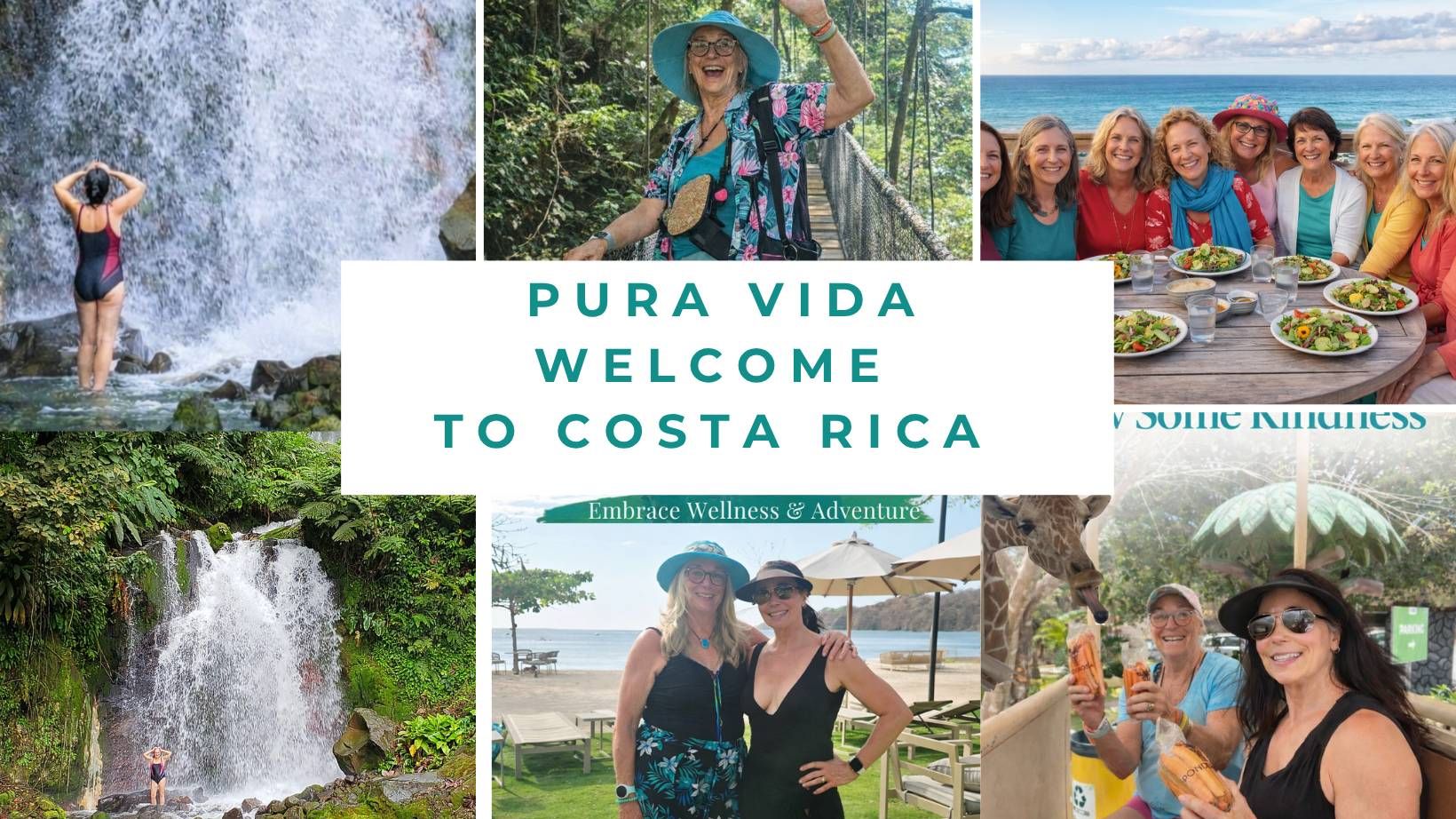
I have just returned from a place where the air feels like a physical embrace. Standing on the edge of a cloud forest with my daughter, watching the mist dance between ancient ferns, I realized that some places on Earth don't just host life—they celebrate it.
This was no ordinary vacation. It was a pilgrimage. My daughter and I were celebrating a milestone that, three years ago, felt like a distant, flickering hope.
We have both navigated the dark tunnels of life-threatening health challenges recently. We fought through the fear, the treatments, and the exhaustion, emerging on the other side with a fierce, renewed gratitude for the simple act of breathing.
As we look toward the horizon of new decades—
her approaching 60 and me approaching 80—we knew we needed a setting that matched the magnitude of our gratitude.
We needed a place that understood resilience. We found it in Costa Rica. This was our first solo trip together since my grandchildren (now 27, 24, and 22!) were born. After decades of being "Grandma" and "Mom" within a larger family unit, we were simply two women, two survivors, soaking in the "Pura Vida" spirit.
But to truly understand why the "Pure Life" resonates so deeply with the resilient soul, we have to look back. We have to look back to the year I was born—a time when both my life and the modern soul of Costa Rica were just beginning to take shape.
The Birth of a Philosophy: 1948 and the Year of Change
I came into this world in the late 1940s, a time of global reconstruction. While I was taking my first breaths, Costa Rica was gasping for its own. In 1948, the year I was a betting started so was the new Costa Rica! this small Central American nation was engulfed in a 44-day civil war.
It was a "disaster" by any definition—neighbor against neighbor, a disputed election, and the looming threat of the same perpetual violence that has plagued so many of its neighbors.
But then, something miraculous happened. José Figueres Ferrer, the leader of the victorious provisional junta, did the unthinkable. On December 1, 1948, he took a sledgehammer to the battlements of the Cuartel Bellavista, the nation’s military headquarters. He didn't just declare peace; he abolished the army entirely.
Imagine the courage that took. In a world reeling from World War II, Costa Rica decided that its "defense" would be its people's well-being. They took the budget that would have gone to tanks and bayonets and redirected every cent into education, healthcare, and social security.
When I look at my own journey of recovery over the last three years, I see the parallel. Sometimes, to survive a "disaster"—whether it’s a civil war or a life-threatening illness—you have to dismantle the old defenses that aren't serving you anymore.
You have to stop fighting the "war" and start investing in "life." Costa Rica chose to be a "civilian" nation, and in doing so, they planted the seeds of Pura Vida.
The Shadow of the Banana Republic: Forged in the Pits
To understand the sweetness of the Pura Vida today, you have to acknowledge the bitterness of the "Banana Republic" days that preceded it. For the first half of the 20th century, Costa Rica was essentially a corporate fiefdom.
The United Fruit Company (UFC) held more power than the government.
The "disaster" here wasn't a single event, but a slow erosion of dignity. The Caribbean lowlands were cleared for massive plantations. The workers—many of whom were descendants of Jamaican immigrants—labored in grueling conditions, often paid in company "scrip" that could only be spent at company stores. The land was treated as an extraction point, not a home.
Yet, even in the "pits" of the banana era, the spirit of resilience was forming. The Great Banana Strike of 1934 showed that the people had a voice. They were learning that their "life force" was stronger than the corporate machinery. When the banana industry eventually collapsed due to Panama disease (a biological disaster in its own right), the nation was forced to diversify.
They returned to the highlands, to coffee, and eventually, to the realization that their greatest asset wasn't a commodity to be exported, but the very beauty of the land itself.
The Resilience of the Life Force: A Personal Reflection
As my daughter and I traveled through the lush landscapes of Guanacaste and the Central Valley, we spoke often of our "second chances." Three years ago, our conversations were dominated by medical terms, test results, and the quiet, heavy weight of uncertainty.
Walking through a butterfly observatory in Costa Rica, watching a Blue Morpho emerge from its chrysalis, the metaphor was almost too perfect.
Resilience isn't about avoiding the struggle; it’s about the transformation that happens because of it.
Costa Rica has faced its share of literal "Ring of Fire" disasters—earthquakes that leveled cities and volcanic eruptions that buried farmland. But each time, the Tico response isn't despair. It is a collective shrugging off of the non-essential.
When you live in a land that is constantly shifting and growing, you learn to hold onto the "Pure Life"—the relationships, the health, and the present moment—because everything else can be taken by the wind or the rain.
For my daughter and me, our health scares were our "Ring of Fire." They burned away the trivialities of our lives. They made us realize that waiting for "someday" to take this trip was a gamble we were no longer willing to take.
The Milestone of Decades: 60, 80, and the Wisdom of the Forest
There is a specific kind of beauty in a primary forest. The oldest trees aren't the smoothest; they are the ones covered in moss, host to thousands of bromeliads, scarred by lightning, and buttressed by massive, gnarly roots. They are the most resilient because they have integrated their history into their growth.
As I approach 80, I feel like one of those trees. My "roots" are deeper than they have ever been. My "scars" from three years ago are part of my strength now. And seeing my daughter approach 60 with such vitality and joy—knowing what she has overcome—is the greatest gift of my life.
In the West, we often view aging as a process of loss. But in the Pura Vida mindset, every year is a "gracias." To reach 80 is a victory of the life force. To reach 60 is a testament to endurance.
We didn't just come to Costa Rica to see the sights; we came to see ourselves reflected in a culture that prioritizes life over everything else.
The Soul of a Nation United
Today, Costa Rica is a global leader in sustainability. They run almost entirely on renewable energy. They have doubled their forest cover in the last few decades.
They are consistently ranked as one of the happiest countries on earth.
This isn't an accident. It is the result of a series of conscious choices made in the wake of disaster.
They chose Peace over the Military in 1948.
They chose Nature over Extraction after the Banana Republic era.
They chose Health and Education as the pillars of their society.
When a local greets you with "Pura Vida," they aren't just saying "hello." They are acknowledging the miracle of your existence. They are saying, "The life in me recognizes the life in you." In the Buddhist tradition Pura vida is their Namaste.
Beyond the history and the deep reflections, there was the pure, unadulterated play—a physical celebration of what our bodies can do now that they are whole again.
We found ourselves swimming in the cool, crystalline pools beneath thundering waterfalls, feeling the spray wash away the last lingering shadows of our hospital rooms. We spent an afternoon tubing down a lazy river, the sunlight dappling through the overhanging Guanacaste trees as we surrendered to the current.
In a moment of pure whimsy, we found ourselves eye-to-eye with the prehistoric grace of giraffes and the bold stripes of zebras, laughing like children as they delicately took carrots from our hands. We soared—literally—zip-lining through the emerald throat of the jungle, the wind whipping past us as we watched white-faced monkeys swing through the branches just a few feet away, their agility a masterclass in living in the moment.
We floated in the salt-warm embrace of the Pacific Ocean, letting the tide carry us, and stood still in a sun-drenched clearing just long enough for a heavy, iridescent Blue Morpho butterfly to mistake us for flowers and land softly on our sleeves.
In those moments, with the "grandchildren" now grown men and women of 27, 24, and 22, we weren't just the matriarchs of the family; we were two vibrant souls, reunited with the magic of the world.
For a mother and daughter who nearly lost that life three years ago, those words were a benediction. We spent our days snorkeling with tropical fish, eating fresh tropical fruit and laughing until our sides ached—something we weren't sure we’d do again during the darkest days of our recovery.
We celebrated the grandchildren who have grown into amazing adults (27, 24, and 22—where did the time go?).
We celebrated the fact that we can still hike, still explore, and still look forward to the next decade with wonder.
A Lesson for the Road Ahead
If you are facing your own "disaster"—be it health, heartbreak, or hardship—look to the history of this small, vibrant country. Look at how they dismantled their weapons to build schools. Look at how they let the jungle reclaim the scars of the plantations.
Resilience is not a solo sport; it is a "united soul" effort. It’s about the hand you hold (like my daughter’s hand in mine) and the gratitude you cultivate.
As we packed our bags to head home, I took one last look at the sunset over the Pacific. The sky was a riot of violet and gold, a final "Pura Vida" from the horizon.
I am returning home not just as a survivor, but as a woman who is fully, vibrantly alive.
Eighty is coming. Sixty is coming. And thanks to the lessons of Costa Rica, we are ready to meet those decades with open arms and a "Pure Life" heart.
Pura Vida.
Your Zesty Sage,

Next in the Costs Rica Series: We’ll explore the "Blue Zone" secrets of the Nicoya Peninsula—how the Costa Rican lifestyle contributes to the longest lifespans on earth, and how we can bring those lessons home.